Two regulators, one post
A clinic in Dubai answers to two health bodies when it advertises. The Dubai Health Authority (DHA) sets the standards for medical content on social media. The federal Ministry of Health and Prevention (MOHAP) issues the medical advertising licence whose number has to appear on the clinic's account. On top of both sits the media regulator, the National Media Authority (NMA, formerly the UAE Media Council), which treats health as a sector where ads need approval from the relevant authority before publication.
The working document for marketers is the DHA's Standards for Medical Advertisement Content on Social Media. Below is what it means for the content you plan and shoot.
What the clinic account must have
- The MOHAP licence number. The clinic's social media account has to display its medical advertising licence number issued by MOHAP.
- Medical director sign-off. Any content that carries the clinic's name goes to the medical director for approval. That includes a reel your SMM agency edited last night.
- Responsibility for the premises. The clinic answers for everything filmed inside its walls, including content an influencer shoots during a "free treatment" visit.
The last point changes how you run influencer collaborations. If a blogger films a procedure in your clinic and posts it with a cure claim, the DHA standards make the clinic responsible, not only the blogger.
What you cannot say or show
Appendix 2 of the DHA standards lists prohibited practices. For a content plan, these are the ones that come up every week:
| Prohibited | What it looks like in practice |
|---|---|
| Promising a complete cure | "Say goodbye to back pain forever" |
| Patient testimonials without written consent | A screenshot of a happy client's WhatsApp message |
| Before/after without a disclaimer | Side-by-side photos with no "results may vary" note |
| Fear-inducing language | "Ignore this mole and it could be too late" |
| Comparisons without peer-reviewed evidence | "Twice as effective as other clinics" |
| "Exclusive", "always effective" | "The only clinic in Dubai with this laser" |
The banned-words list
In late August 2026 the DHA sent a circular to private facilities requiring compliance with these standards and warning of disciplinary action. Standard 6.11 lists the words a clinic post cannot use, among them: "miraculous", "magic", "unique", "the best", "exclusive", "safest", "incomparable", "unprecedented", "100 per cent", "absolutely certain", "assured success", "has no side effects", "get money back", "famous", "pioneer" and "immediate results" (DHA standard 6.11; Gulf News reported the list when the circular went out). Run every caption and on-screen text through that list before the medical director sees it.
Two rules catch aesthetic clinics most often (standards 6.1–6.3):
- Titles. Only the title on the DHA licence. "Cosmetic Specialist", "Aesthetic Consultant", "Cosmetologist", "Anti-Ageing Specialist" and "Beauty Expert" are out.
- "Dr". Only physicians, dentists and holders of a recognised PhD attested by the UAE Ministry of Education.
The federal media rules point the same way. Article 33 of the executive regulation bans ambiguous claims, claims of exclusivity and exaggeration, and requires ads to be visibly separated from regular content.
Before and after content
Before/after is the format aesthetic and dental clinics rely on most, and the DHA does not ban it. It sets two conditions:
- A visible disclaimer that individual results vary.
- Written consent from the patient whose images you use, plus a parent's consent if the patient is under 18.
Standard 9.6 adds the technical part, which the 2026 circular put back in the spotlight (DHA, Gulf News The National): the same person, the same lens, no editing, and the disclaimer plus risks in the same font size as the rest of the post. That rules out the usual workflow of a phone "before" and a retouched studio "after". Shoot both frames on one camera with fixed lighting and save the raw files; the medical director must archive posts for DHA audits anyway.
Keep the disclaimer on the image or in the first frame of the video, not only in the caption. Captions get cut off and reposted without context.
Patients on camera
The DHA standard 6.10 makes patient consent mandatory, and the standards forbid filming a patient under general anaesthesia at all.
Federal criminal law adds weight. Under the cybercrime decree-law, photographing or filming a person without consent can lead to prison from six months and/or a fine of AED 150,000 to AED 500,000. In a clinic that covers patients in the waiting room, staff in the background and anyone whose face appears in a reflection.
A workable routine:
- written consent signed before the camera comes out, stating where the content will be published;
- a separate release for staff who appear regularly;
- a second pass in the edit to blur or cut anyone who did not sign.
MOHAP rules for deals and Arabic text
MOHAP's guidelines for health advertisement approval add three requirements that SMM teams tend to miss:
- E-deals carry their own mandatory disclaimer.
- Educational statements are required in ads for cosmetology, weight loss and food supplements.
- Arabic translation of the ad text is required.
The Arabic point ties in with federal consumer law, which requires consumer-facing ads to be in Arabic, with other languages allowed alongside. Cabinet Decision 66/2023 sets a fine of AED 100,000 per violation. A Russian- or English-only carousel for a weight-loss programme fails on two counts.
Influencers and clinics
An influencer who advertises your clinic from the UAE needs an NMA Advertiser Permit, mandatory since 1 February 2026. Brands are expected to check the permit before they pay, and a law firm advises putting the permit number into the contract. Gulf News covers the same obligation.
Health ads also need sector approval before publication, on top of the influencer's permit. So a blogger post about your clinic needs three things in place: the influencer's NMA permit, the health-sector approval, and your medical director's sign-off. Our Advertiser Permit guide explains how the permit works.
Cosmetics and skincare products
If the clinic also sells its own skincare line, the products follow a different track. In Dubai, cosmetics advertising goes through pre-approval in Dubai Municipality's Montaji system, and medical claims are not allowed for cosmetic products. A serum cannot "treat acne" in its ad, even if a dermatologist sells it.
Formats that work inside the rules
The banned list is long, but it leaves most of what patients want to see. Formats that fit the DHA standards without stretching them:
- A doctor explains a procedure. What happens, how long it takes, what recovery looks like. No promises about outcomes, and the medical director checks the script.
- Answers to real questions. Take the questions your reception gets on WhatsApp and turn each into a short video. The format educates, which is what MOHAP asks for in cosmetology and weight-loss ads.
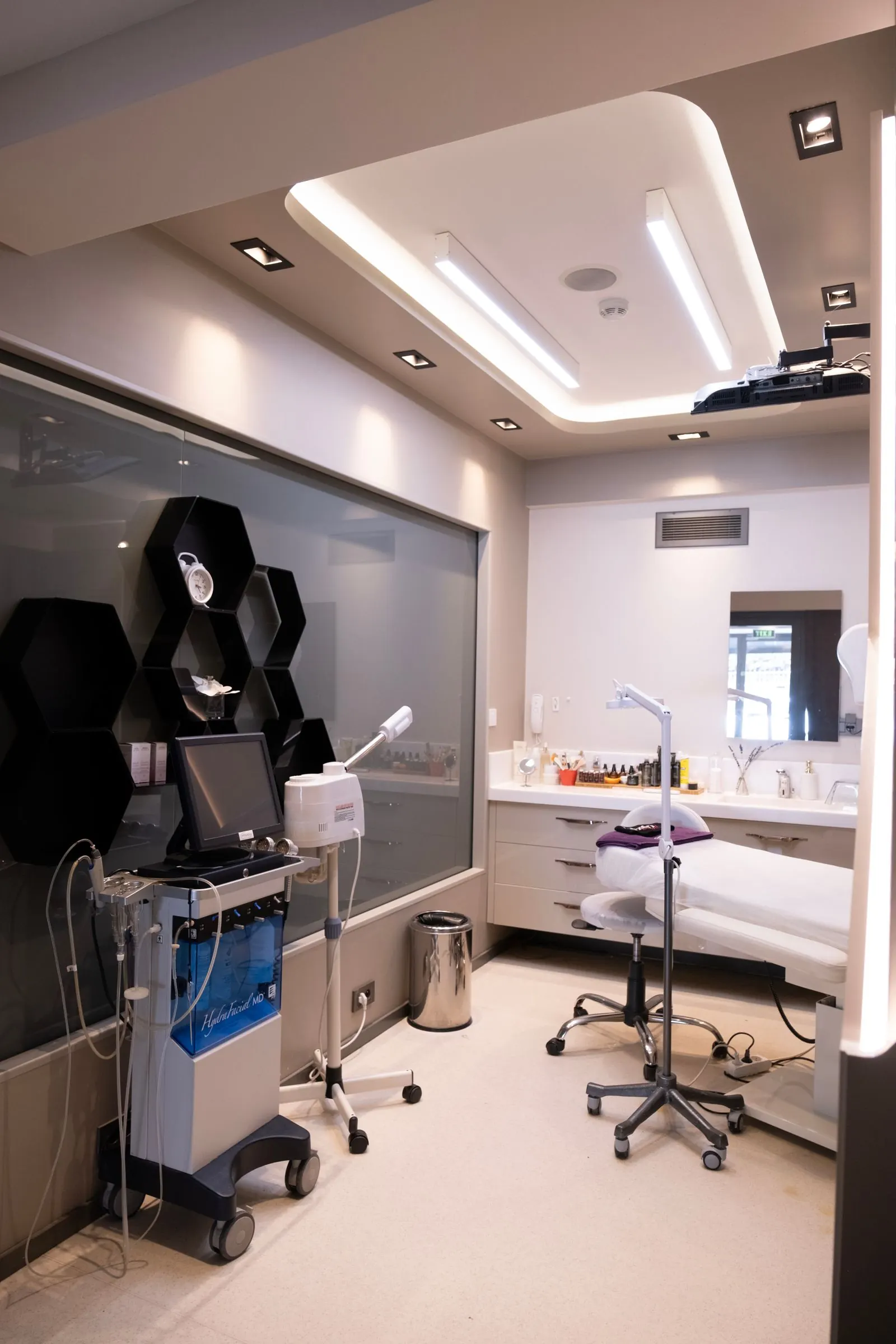
- The team and the equipment. Introduce the doctors with their specialties, show the rooms and devices. Skip "the only laser in Dubai" unless you can prove it.
- Before/after with consent and a disclaimer. One case per post, with the patient's signed consent on file and the disclaimer on the image.
- Behind the scenes. Sterilisation, preparation of a room, a day at reception. Blur or cut every patient who did not sign.
Plan the month in one document, send it to the medical director as a batch, and shoot only what came back approved. Rework after the shoot costs more than a day of review before it.
What we could not confirm
Two gaps remain, and we prefer to name them rather than guess:
- The DHA circulated these standards to private facilities in late August 2026 with a warning of disciplinary action (The National, Gulf News). We have read the press coverage and the 2022 standard; the circular itself is on the DHA's Sheryan portal. Check it there for the exact wording.
- Abu Dhabi clinics are regulated by the Department of Health (DoH). This guide does not cover DoH rules.
A checklist for every clinic post
- MOHAP medical advertising licence number visible on the account.
- Medical director has approved this specific piece.
- No cure promises, no "exclusive", no "always effective", no fear.
- Before/after carries a results-vary disclaimer and the patient's written consent.
- Everyone recognisable on camera has signed consent.
- Deal posts carry the MOHAP e-deal disclaimer; cosmetology, weight-loss and supplement ads carry the required educational statements.
- Arabic version of the text prepared.
- Influencer's NMA permit checked and written into the contract.
For the marketing side, formats that work and how to build a doctor-led content plan inside these rules, see clinic marketing in Dubai. If the approved content will also run as paid ads, the same checklist applies to every creative in Meta campaigns. For other sectors, see our guides on real estate ad rules and alcohol, shisha and tobacco advertising.