Rated temperature versus a Dubai afternoon
Manufacturers publish an operating range: the air temperature around the device in which it is designed to work. Put those next to Dubai's monthly averages from the WMO 1991–2020 normals for the airport station and the problem is plain.
| Device | Rated maximum | Months when Dubai's average daily max is above it | Source |
|---|---|---|---|
| iPhone, iPad | 35°C | May–Oct (6 months) | Apple |
| DJI Mini 4 Pro | 40°C | Jun–Aug (3 months) | DJI |
| DJI Osmo Pocket 3 | 40°C | Jun–Aug | DJI |
| Sony a7 IV | 40°C | Jun–Aug | Sony |
The monthly mean maximum climbs from 38.2°C in May to 40.3°C in June, 41.5°C in July and 41.9°C in August, then drops to 39.5°C in September and 35.9°C in October. These are averages for shade at a weather station. A black camera body in direct sun on a white plaza runs hotter than the air.
Two consequences. First, from June to August an average afternoon is outside the rated range of almost everything in a creator's bag. Second, for phone creators the season is longer: half the year, the afternoon is above 35°C.
What overheating actually looks like
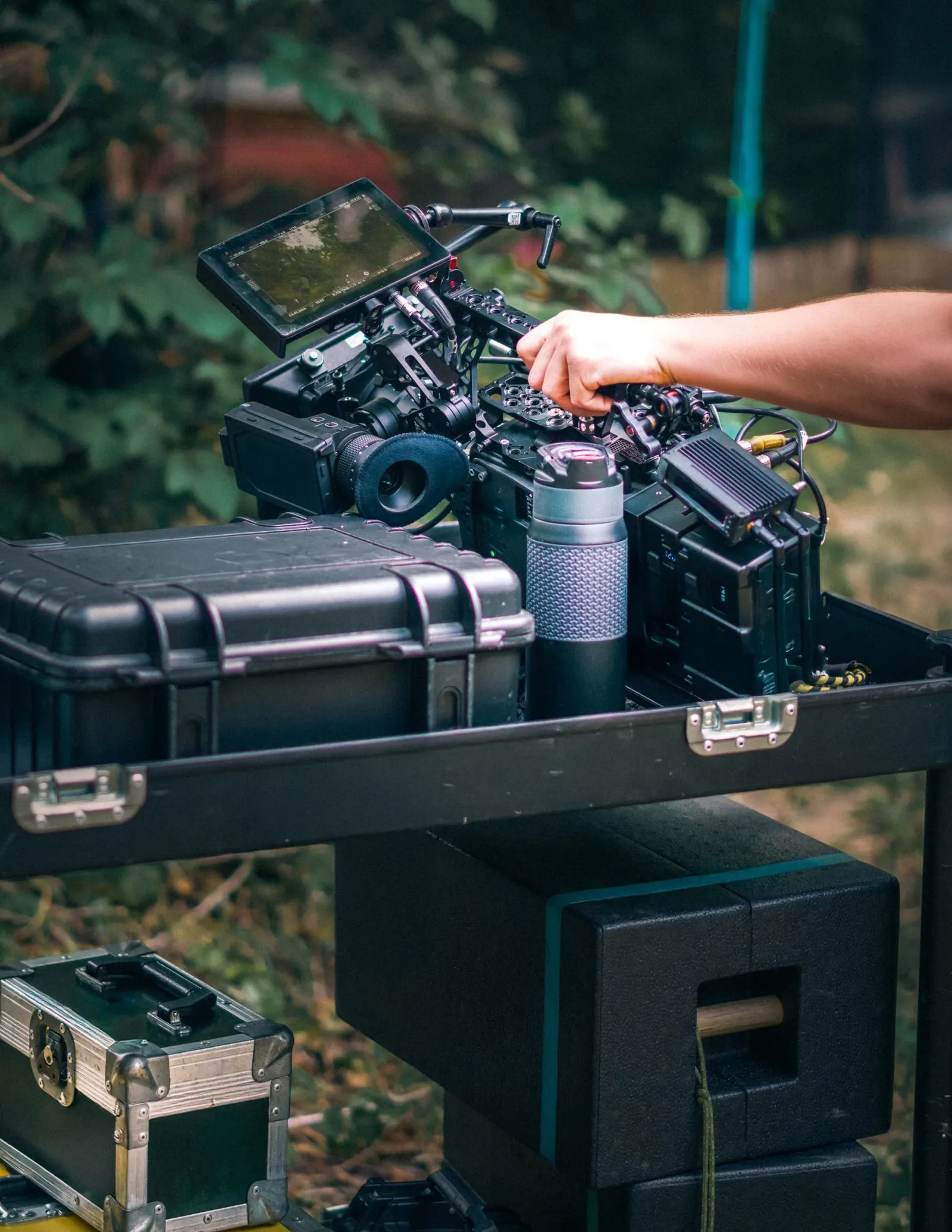
Each maker describes the protective behaviour, and you will see all of it in Dubai.
- iPhone. Apple lists: charging slows or stops, the display dims or goes black, cellular signal weakens, the camera flash may be disabled, and in extreme conditions the device becomes temporarily unusable. Apple also warns that heavy use in heat "can permanently shorten battery life".
- Sony a7 IV. The camera heats quickly in high ambient temperatures, image quality may deteriorate, and the camera may stop recording movies or turn off. Sony's instruction: leave it off until both camera and battery cool, or it will shut down again.
- GoPro HERO13 Black. It shows "Camera is too hot", saves the clip and powers off. GoPro's own fixes: shade, airflow, lower resolution or frame rate, screens off, external power instead of the battery.
- DJI Osmo Pocket 3. Note the second number on its spec sheet: charging is rated 5–45°C, so charging in a hot car between set-ups is outside spec.
The fog problem: why your lens mists over
This one surprises people more than the heat. Summer air in Dubai holds a lot of water: the average dew point in July and August is about 73°F, roughly 23°C, and June and September bring the most humid spells, The National notes.
The arithmetic: a camera that spent the night in a 21–22°C apartment is colder than a 23°C dew point. Walk out, and water condenses on the front element, inside the viewfinder and sometimes inside the lens. It takes as long as the glass needs to warm up.
Sony's fix works for any brand: put the camera in a sealed plastic bag before you leave the cold room and wait about an hour until it reaches ambient temperature. If condensation has already formed, turn the camera off and wait about an hour. In practice we take the bagged kit out to the car or the terrace 45–60 minutes before the first shot.
Sand: the damage that cannot be repaired
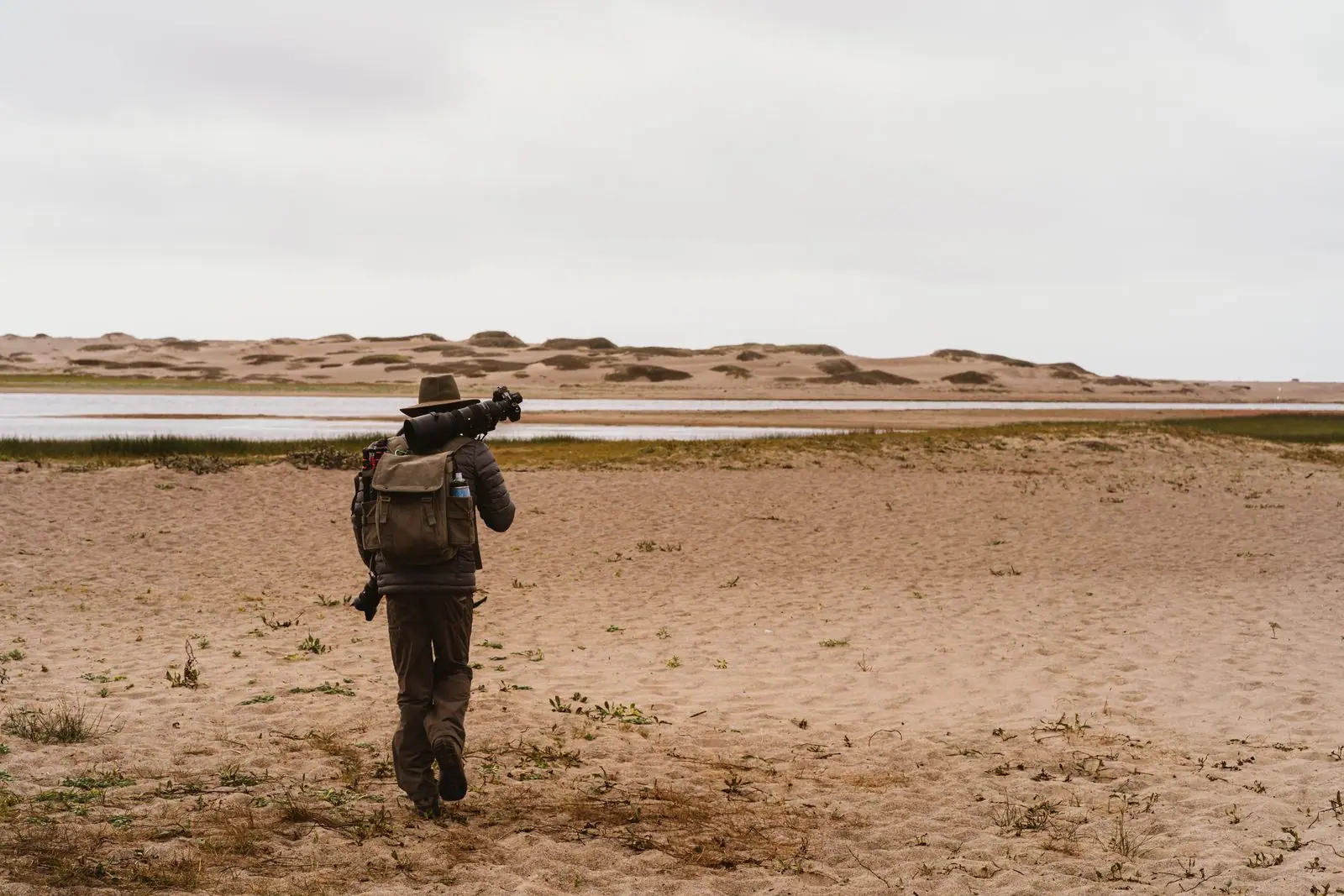
Sony's precautions are blunt: in sandy or dusty places, sand that gets into the camera may cause a malfunction that "cannot be repaired". The same page says to clean off water, sand, dust and salt after use. For desert and beach shoots:
- Mount the lens before you leave the car. Change lenses only inside the car or a closed bag, never in the wind.
- Keep the body cap and rear lens cap clean; Sony asks you to remove dust from the cap before fitting it.
- Use a rocket blower first. A cloth drags grains across the coating.
- Put the phone or action cam in a clear zip bag between takes on a windy day.
- Wipe salt spray off after any beach or yacht shoot.
The desert also adds direct sun on the lens. Sony warns that sunlight focused through a lens can cause smoke or fire inside the camera: keep the cap on when the camera sits facing the sun.
Field kit for a summer shoot in Dubai
| Problem | What we pack | Why |
|---|---|---|
| Overheating | Spare body or phone, more batteries than usual, white or silver cover | Rotate devices instead of waiting for one to cool |
| Battery heat | Cool bag (no ice packs touching gear) | Keep spares near ambient, out of the sun |
| Charging | Power bank used in shade or AC | Most devices slow or stop charging when hot |
| Condensation | Zip bags, silica gel | Sealed warm-up, as Sony recommends |
| Sand | Rocket blower, lens pen, rain cover | Lens changes away from wind |
| Phone creators | Clip-on fan or cooler, screen brightness down | Fewer thermal cut-offs on long takes |
Timing does more than any gadget
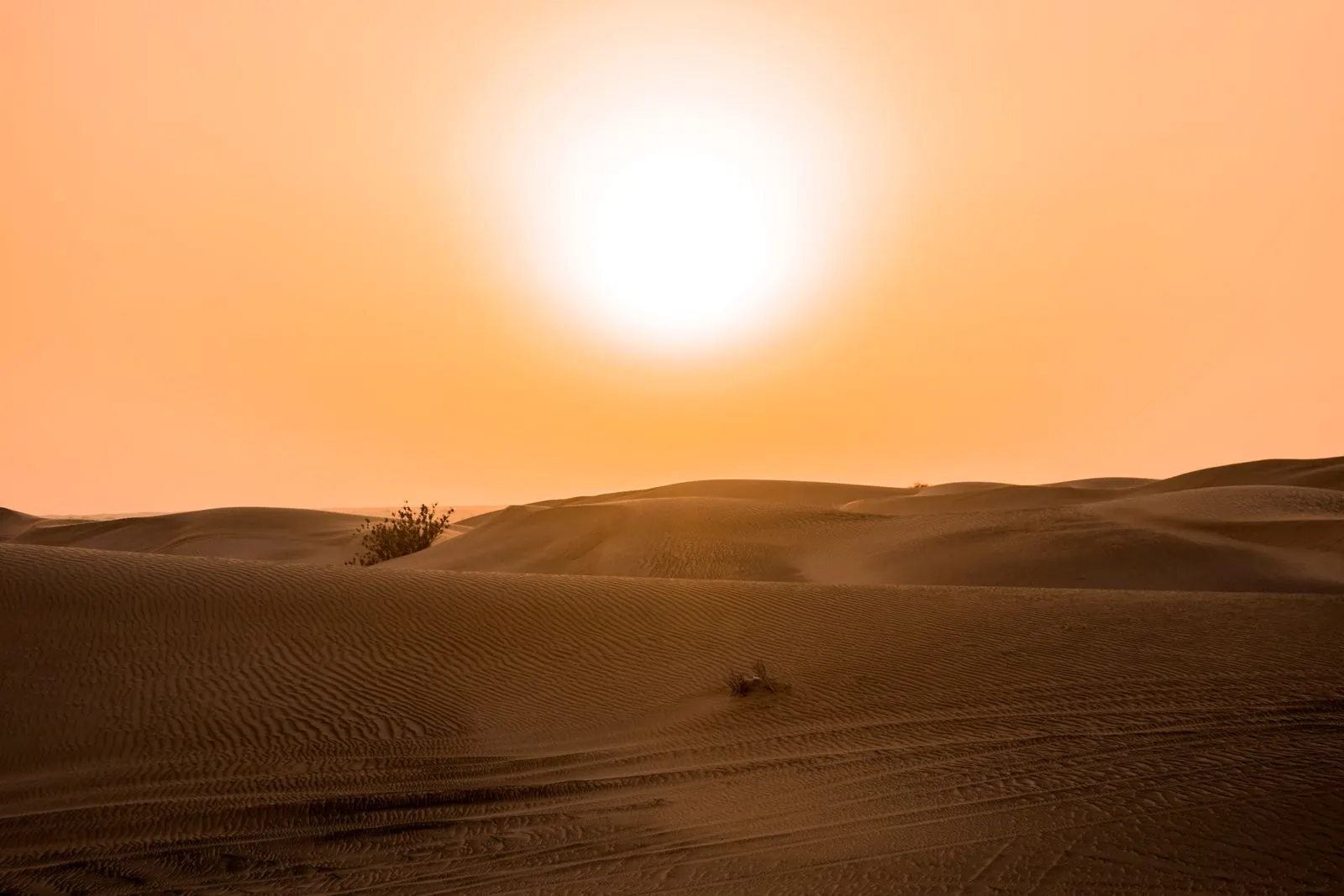
The cheapest fix is the clock. Shoot the first two hours after sunrise and the last two before sunset, and use midday for interiors. That also keeps people safe: from 15 June to 15 September outdoor work in direct sun is banned at midday for workers, which we cover in our summer heat safety guide. If you plan a drone shot, remember the legal side too: drone rules in Dubai.
Rather not babysit overheating cameras? Book our videographer in Dubai: we bring spare bodies and batteries and plan around the heat. Special offer: one-off shoots from AED 950.